
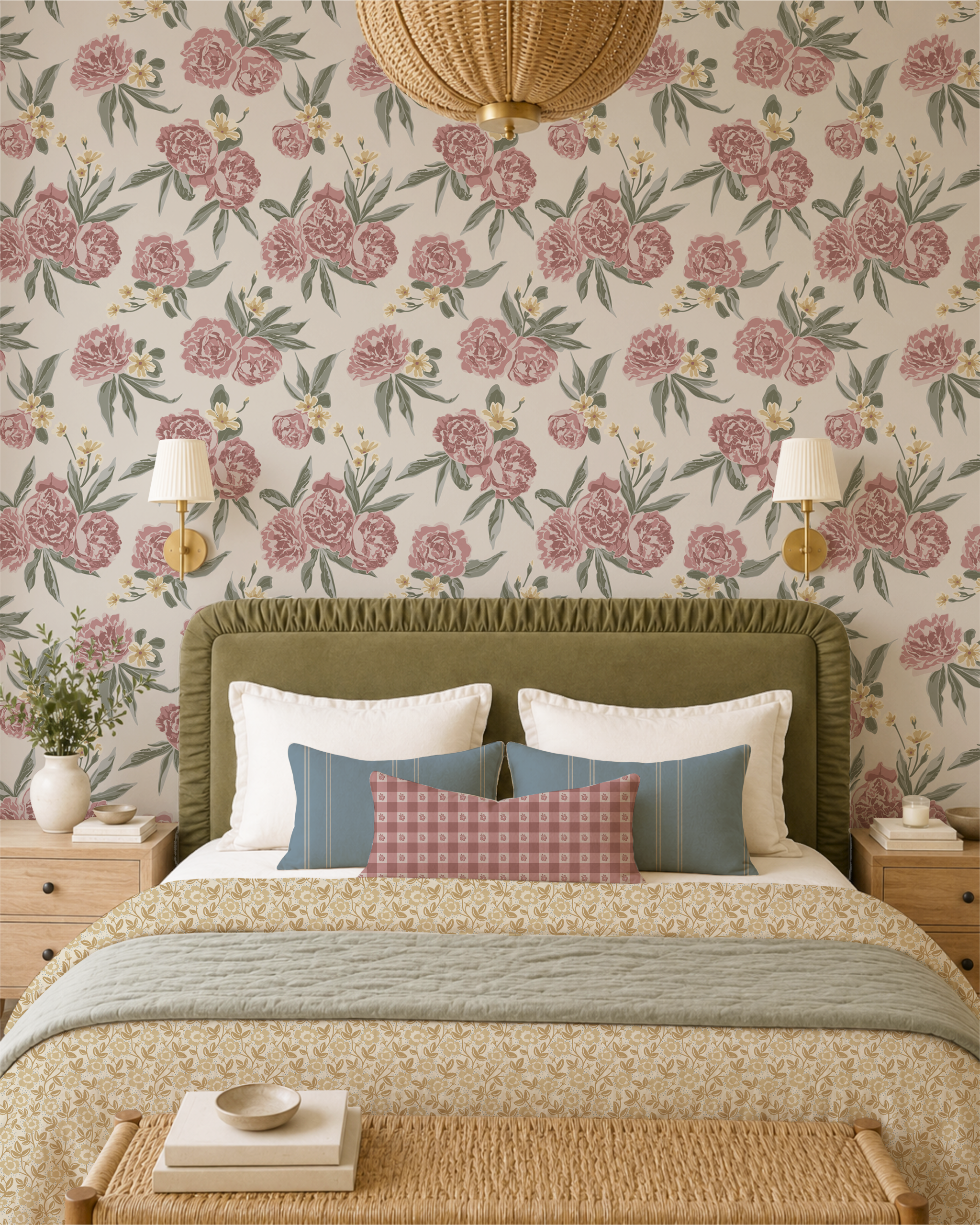
How to Pair Romantic Florals and Small Prints Without Making a Room Feel Busy
Learn how to pair romantic florals with smaller prints using scale, colour and quiet spaces to create a warm, layered room that feels collected rather than busy.
There is something especially inviting about a room filled with pattern. Florals, small prints, stripes and checks can add warmth and personality in a way that solid colours alone often can't. But when several patterns are brought into the same room, it can be difficult to know where to stop.
The key isn't to make every pattern match. It's to give each one a different role. Start with one pattern that leads the room, then build around it with quieter prints that share some of its colours and character.
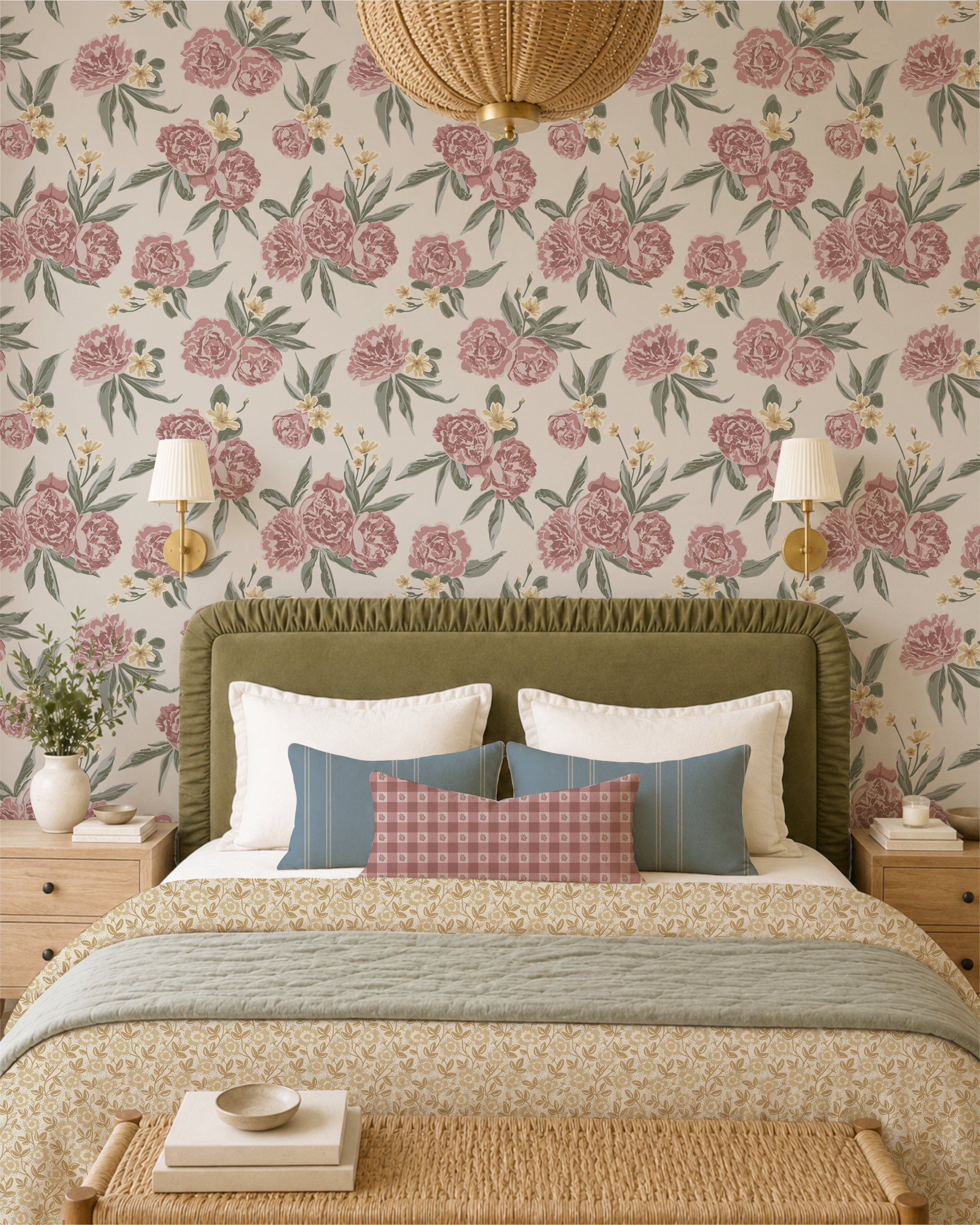
Romantic floral wallpaper
Start with One Floral You Love
Begin with the pattern you most want to see in the room. This might be a floral wallpaper, a duvet, curtains or an upholstered chair.
A larger romantic floral works particularly well as this starting point because it gives you several colours to draw from when choosing everything else.
In Heirloom Bloom, for example, Peony Pathways can take that leading role. Its larger flowers give the room a clear focal point while providing a palette that can be carried into smaller patterns elsewhere.
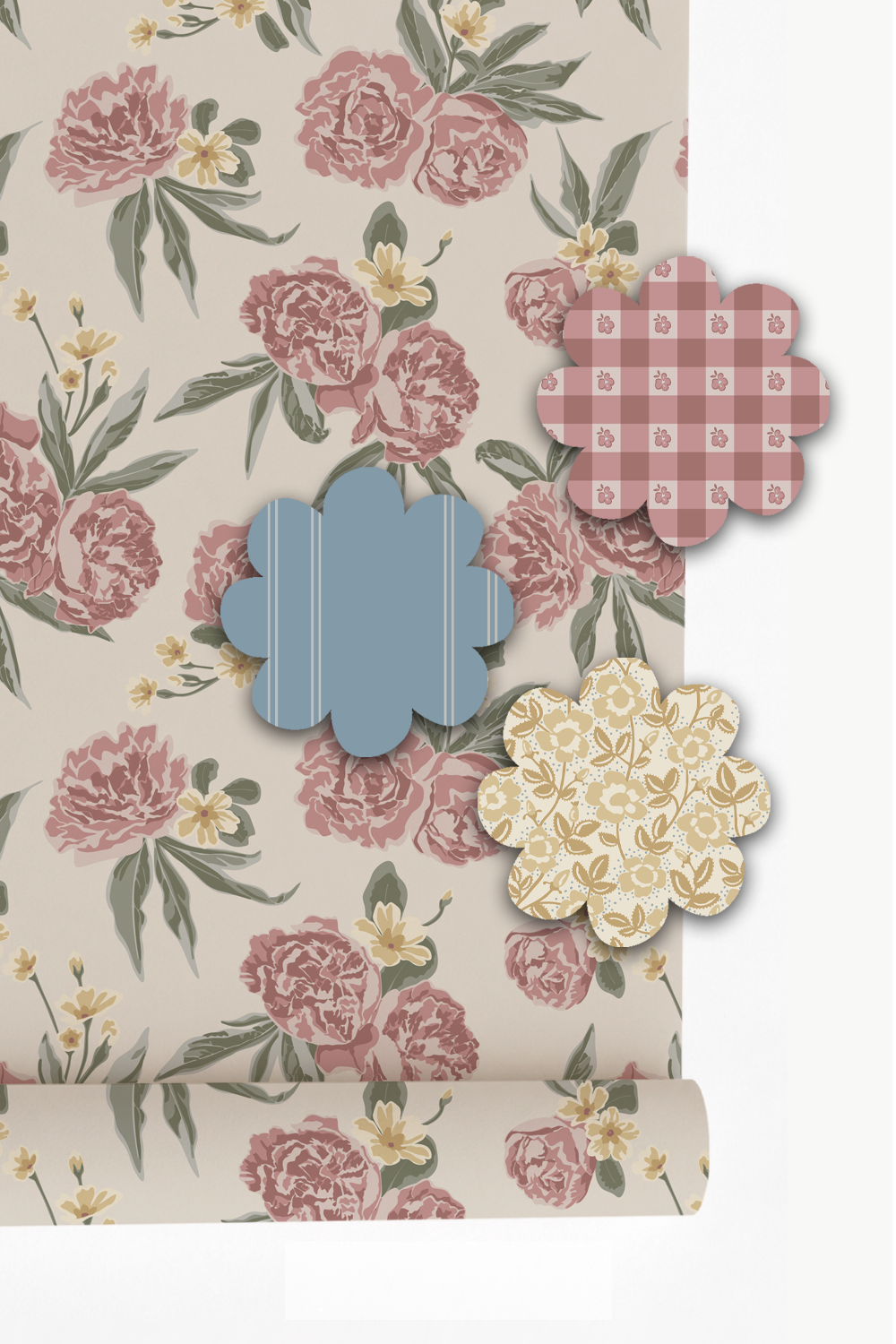
Smaller prints let the hero floral shine
Add Smaller Prints Rather Than Another Competing Pattern
Once you have chosen your main floral, resist the temptation to find another pattern with the same visual strength.
Instead, look for smaller prints that can sit comfortably beside it.
Tiny florals, simple geometrics, ginghams and narrow stripes can all work well because they add interest without competing with the larger floral.
The difference in size is important. When every pattern has similarly sized motifs, they can begin to fight for attention. Pairing a generous floral with something noticeably smaller gives the eye an easy way to move between them.
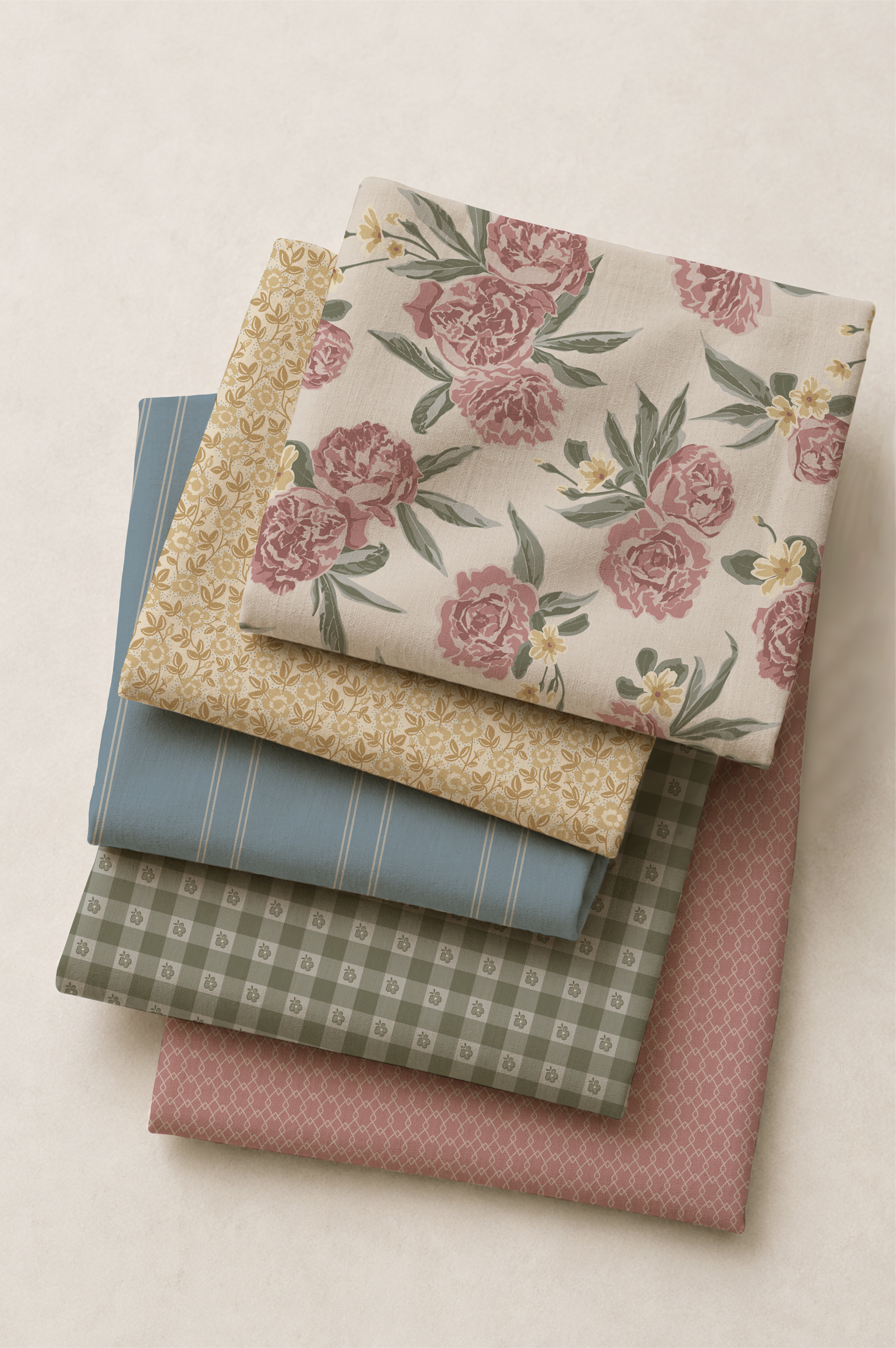
Patterns don't need to contain exactly the same colours to belong together
Let Colour Connect the Patterns
Look for a few colours that repeat throughout the room. A soft green from the leaves of a floral might appear again in a small print. A muted pink might be picked up in another fabric. A warm neutral can quietly run through several patterns.
Those small connections are often enough to make a combination feel intentional without making the room look overly coordinated.
This is also what allows a room to feel as though it has developed naturally over time rather than being purchased as a matching set.
Give Each Pattern a Different Job
Not every pattern needs to cover a large surface.
You might use the leading floral on wallpaper or bedding, then bring smaller prints onto cushions, a Roman blind or an upholstered seat. A stripe, gingham or quiet geometric can appear in smaller amounts elsewhere in the room.
Thinking about patterns this way makes the process much easier: one leads, a few support, and some appear only in small amounts.
It also means you don't have to use every coordinating pattern simply because it belongs to the same collection.
Choose the ones that help the room.
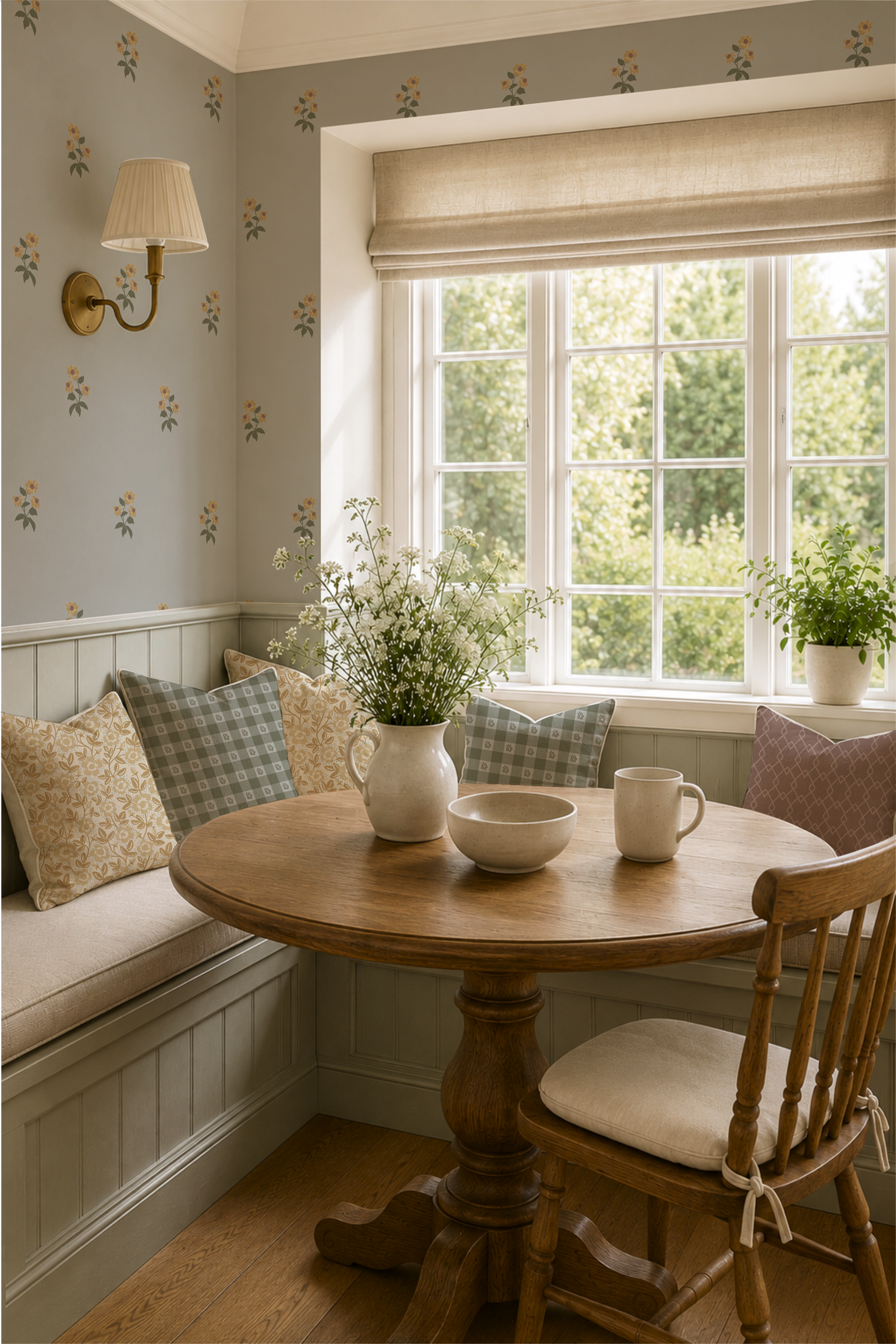
Every surface doesn't need to contain another pattern
Leave Some Quiet Space
One of the easiest ways to make several patterns work together is to give them something quiet to sit beside.
Painted walls, simple bedding, natural wood, an antique dresser, a plain lampshade or an unpatterned upholstered piece can all provide visual breathing room.
This doesn't mean the room needs to become neutral. It simply means that every surface doesn't need to contain another pattern.
In a character-rich room, those quieter elements are often what allow the florals to stand out.
See the Idea in Heirloom Bloom
I designed Heirloom Bloom around this kind of relationship between patterns.
Peony Pathways brings the larger romantic floral, while smaller florals, gingham, ticking and quieter geometric patterns offer different ways to layer pattern into a room without asking every design to be the centre of attention.
You don't need to use them all together. Instead, begin with the pattern you love most and choose one or two quieter companions from there.
The result can still be richly patterned, but it feels comfortable rather than busy—a room where the individual pieces belong together without looking overly matched.
If you'd like to see how the patterns work together, explore the Heirloom Bloom collection and choose the combination that feels right for your own room.
Starting Small With Wallpaper

Floral Duet Wallpaper
Wallpaper is showing up more and more in home decor since people are wanting to personalize their spaces. Enough of the sterile white kitchens! But where are the best places to install wallpaper if you just want to start small?
ACCENT OR FEATURE WALL
Typically in a living room, dining room, or bedroom, a feature wall gives a focal point without overwhelming the whole room. Simply decide which wall is most visible when entering the room, and/or best seen from other rooms. Since it is only one wall, you can choose something as bold or subtle as you want. Both will work for an accent wall.POWDER ROOM OR HALF BATH
Have you seen the trend to wallpaper an entire half bathroom? So impactful! This is an opportunity to go bold or dramatic without it being ‘too much’. Surprisingly, papering a small space does not make it feel smaller but makes a statement that draws people in. With a smaller room, there it less material required and therefore costs less.BEDROOMS
Hanging wallpaper in a bedroom makes a statement on the wall behind the head of the bed or even behind the dresser. Here you can choose to just paper one wall like an accent wall or paper the entire room. One caution would be to choose a pattern that is more on the soothing side as you still want to invite sleep. To save costs on papering the entire room, consider doing a bead board wainscoting on the bottom of the wall (less costly than wallpaper), and then applying wallpaper around the top half of the room. Or, if you are bold enough, try papering the ceiling!HALLWAYS, ENTRYWAYS, FOYERS
These are transition spaces where wallpaper can set the tone and interest without needing full-wall coverage. You can choose to paper only one wall or a portion of all walls. For example, in an entryway try wallpapering the lower half of the wall and painting the upper half, adding a beautiful wood trim (inexpensive) to cover the transition between the two. With wallpaper on the lower half of high traffic spaces it can also help to protect walls from general wear.STUDY AREA, READING NOOK, BEHIND BOOKCASES
Other small areas of the home can be emphasized with a little wallpaper too. A cantilevered space with a small table and chairs would make a great study or breakfast space and it would be elevated with a splash of wallpaper to define the area. The same goes for a reading nook, if you are fortunate enough to have one. Many homes have a fireplace with recessed spaces on either side and, to balance it all out, bookcases are placed in those spaces. But instead of a plain painted wall, try adding wallpaper behind the bookcases to draw in the eye and yet not overwhelm the entire room.
BACKS OF SHELVING, INSIDE BOOKCASES, SMALL NICHES
These are often overlooked places to install wallpaper but they are perfect for adding a pop of pattern. If you want to just start small or unsure of what you would like as a wallpaper, this may be a great place to start.
So whether you are hesitant to hang your first panel of wallpaper or wanting to save some costs, consider starting small with some of these spaces. Whatever you decide, you will be taking a step toward making your home more you!
How to Measure a Room for Wallpaper

Repapered Bedding with Spring Unfolded Collection
Have you noticed that the trend for wallpaper has been increasingly popular?
You may remember that in the early 2000s wallpaper had a bad rap. It was mainly driven by changing design trends and the challenges associated with older wallpaper materials and installation. Many of the patterns from the '80s and '90s—floral motifs, heavy damasks, and gaudy prints—felt outdated and too busy. Wallpaper designs seemed old-fashioned and out of touch. But one of the biggest turn-offs for homeowners and renters alike was the difficulty in removing wallpaper. Older wallpapers were often glued down with strong adhesives, and peeling or stripping them off could be a time-consuming and frustrating task, often leaving behind remnants that required hours of cleaning and scraping. This made many people hesitant to use wallpaper in their homes.
However, like most styles, wallpaper has come full circle and returned with a flourish. Due to new trends like peel-and-stick wallpaper, advances in digital printing, and a shift toward personalized, unique designs, wallpaper is now viewed as a fun, customizable option that can add texture, color, and personality to a space without the same drawbacks as the past.
So today if you find yourself scooped up in this super-fun trend BUT are feeling overwhelmed then let me show you how to start!
Measuring your wall(s) accurately is the first step. Always measure the tallest point of the wall and the widest point of the wall as in the diagram below. You do not need to include baseboards. Also, do not subtract for windows or doors as this will simply be trimmed out when applying the wallpaper to the wall.

Always measure the tallest and widest point of the wall for wallpaper
Wallpaper is printed in such a way that the pattern lines up perfectly based on the length of the roll. So when you begin applying the wallpaper on a basic wall, start at the top of the wall and proceed from left to right. That way, when you begin again at the top of the wall with the next sheet, the repeat pattern will match the previously applied sheet.
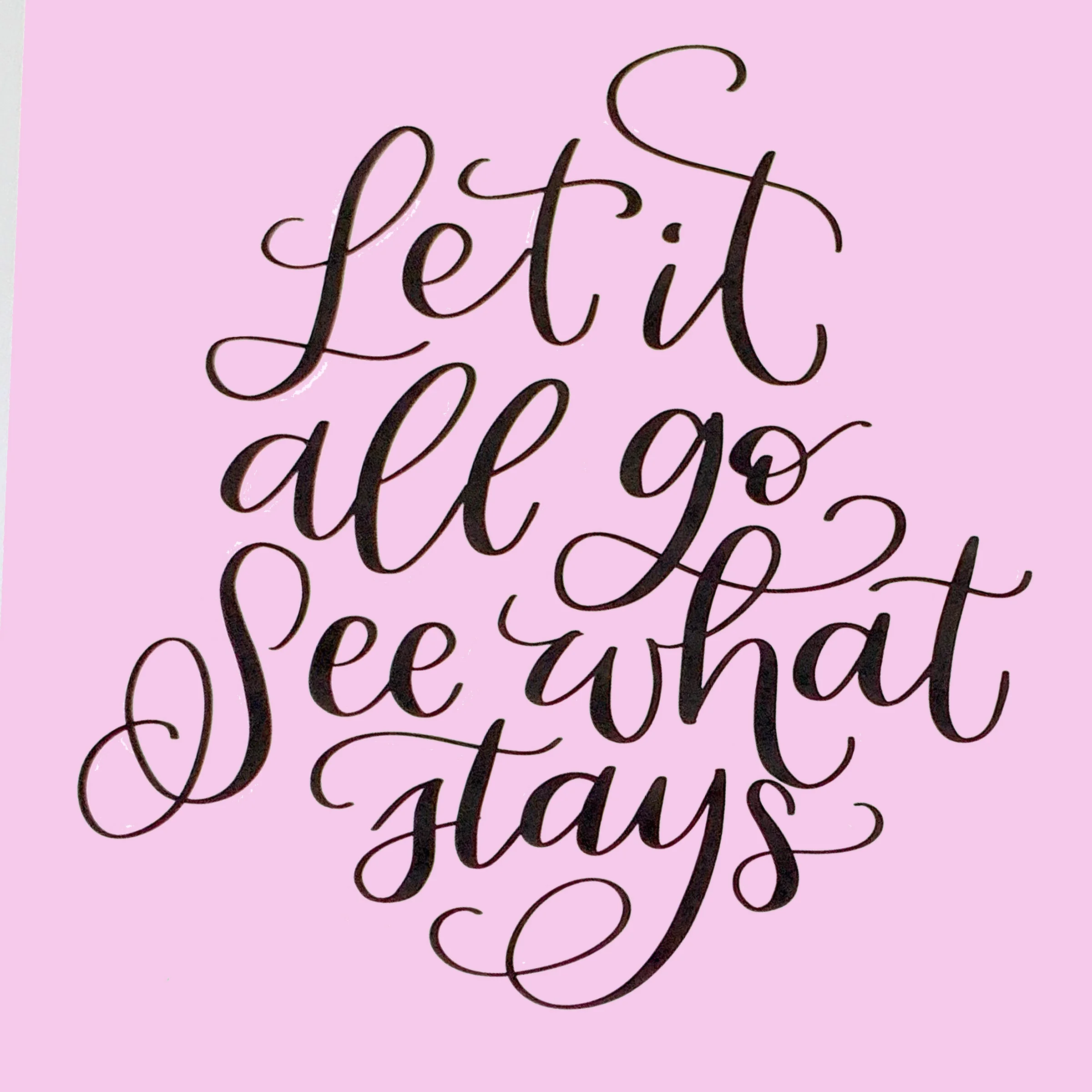
Process for a Calligraphy Piece
I am not yet able to create a perfect calligraphy piece on the first attempt.
Many calligraphers can pick up a pen and their years of practice and learning have brought them to a place where they can just start writing and make a perfect piece the first time. I hope to be there one day.
In the meantime, I still have to make many versions of a quote before I can call it ‘done’. Often I will start with a pencil drawing straight from what I envision in my mind. That doesn’t always look good, so I pull out my eraser and make a few changes and tweaks. This can happen several times.

When I feel that it is getting close to what I want I will draw the piece in brush pen, so that I can make adjustments for the width of the pen lines.

Inevitably, once I see it done in pen I usually see a few more areas that could be better. Again, I could end up doing this a few more times. Sometimes I am happy at this point and let it rest.
But sometimes I look at this quote after a few weeks and see where I still need to make changes. When this happens I will bring the piece into my iPad as an image and then I can trace it and make adjustments from there.

Currently, this is where this piece resides. I am still unsettled on a few things, so I will work further on it.
But eventually, this quote will end up in my little Etsy shop!
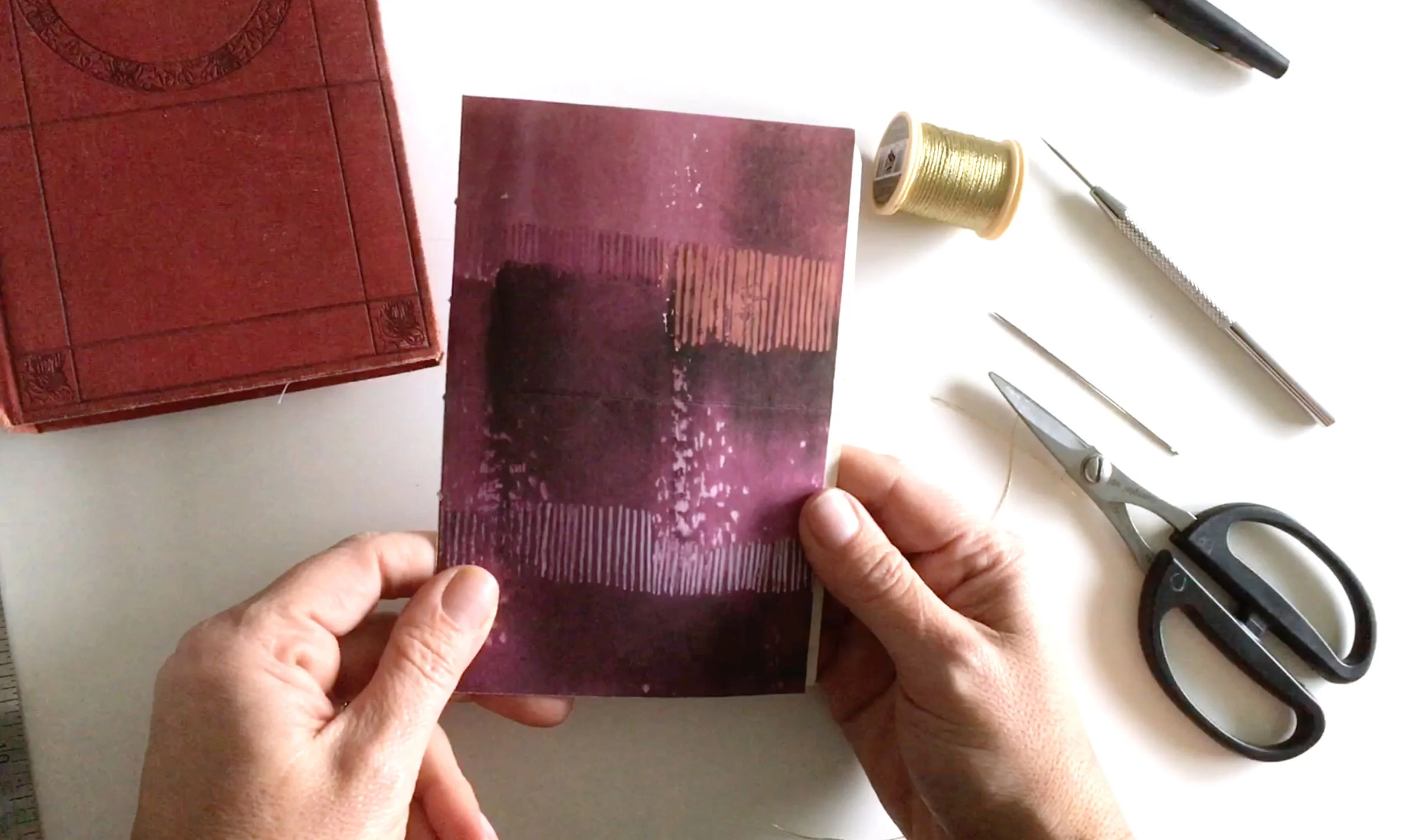
Tutorial: Pamphlet Stitch for Making Notebooks
A while ago I shared an album flip through of my Summer Memories album. In that video I mentioned that I would do a video that demonstrates how to do the pamphlet stitch, which is what I used for that album.
Well today the timing and lighting came together, so here is that video! Enjoy!