
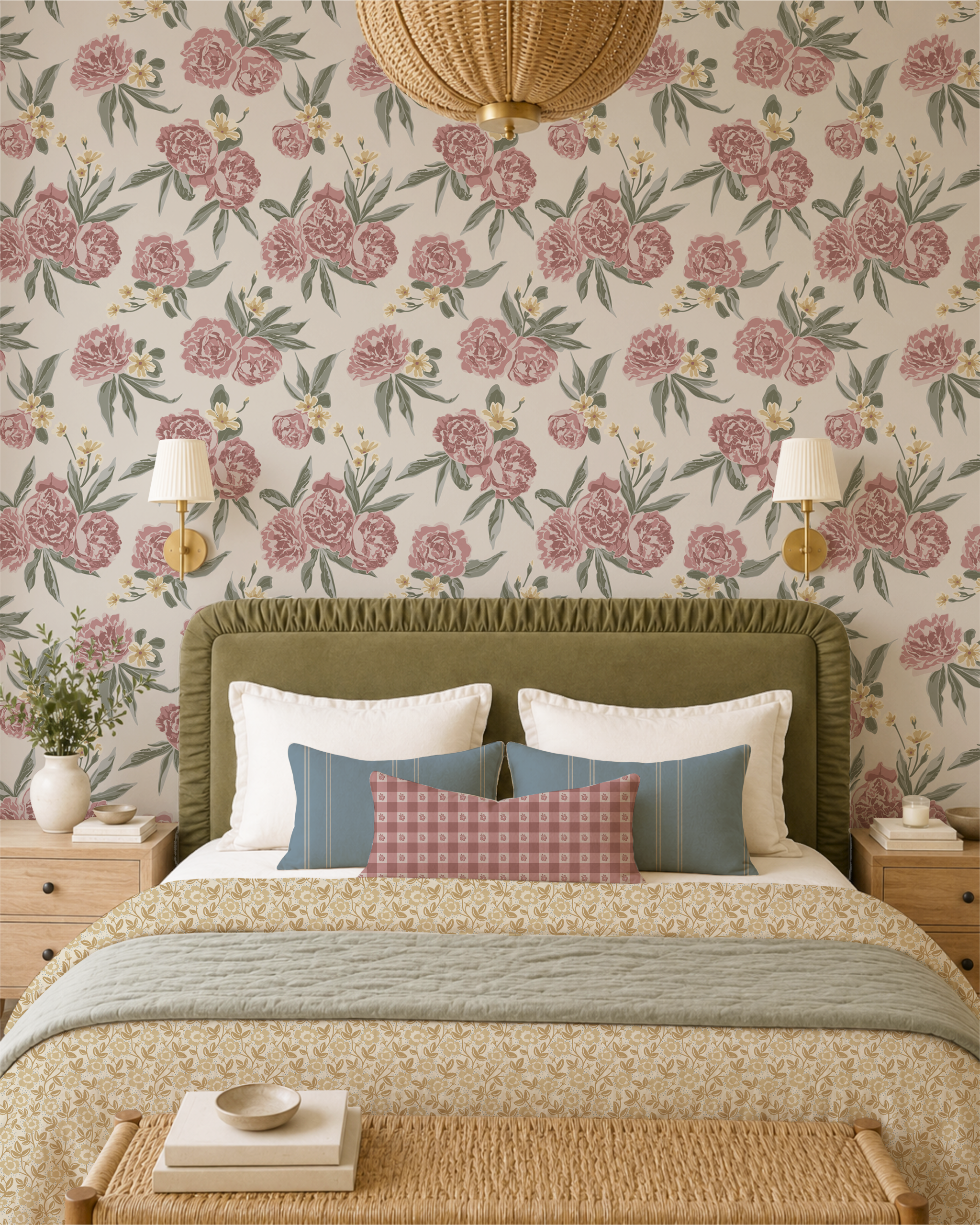
How to Pair Romantic Florals and Small Prints Without Making a Room Feel Busy
Learn how to pair romantic florals with smaller prints using scale, colour and quiet spaces to create a warm, layered room that feels collected rather than busy.
There is something especially inviting about a room filled with pattern. Florals, small prints, stripes and checks can add warmth and personality in a way that solid colours alone often can't. But when several patterns are brought into the same room, it can be difficult to know where to stop.
The key isn't to make every pattern match. It's to give each one a different role. Start with one pattern that leads the room, then build around it with quieter prints that share some of its colours and character.
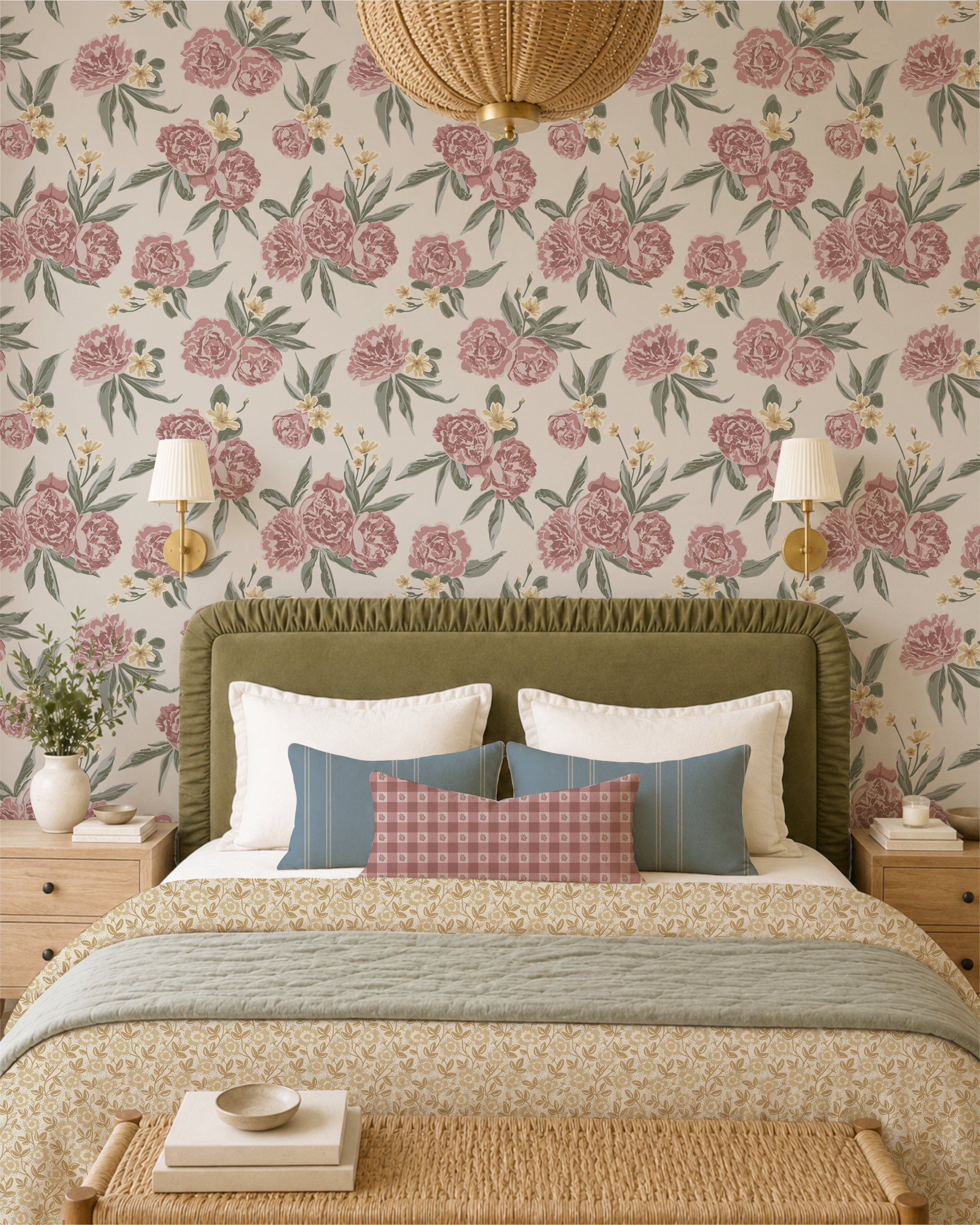
Romantic floral wallpaper
Start with One Floral You Love
Begin with the pattern you most want to see in the room. This might be a floral wallpaper, a duvet, curtains or an upholstered chair.
A larger romantic floral works particularly well as this starting point because it gives you several colours to draw from when choosing everything else.
In Heirloom Bloom, for example, Peony Pathways can take that leading role. Its larger flowers give the room a clear focal point while providing a palette that can be carried into smaller patterns elsewhere.
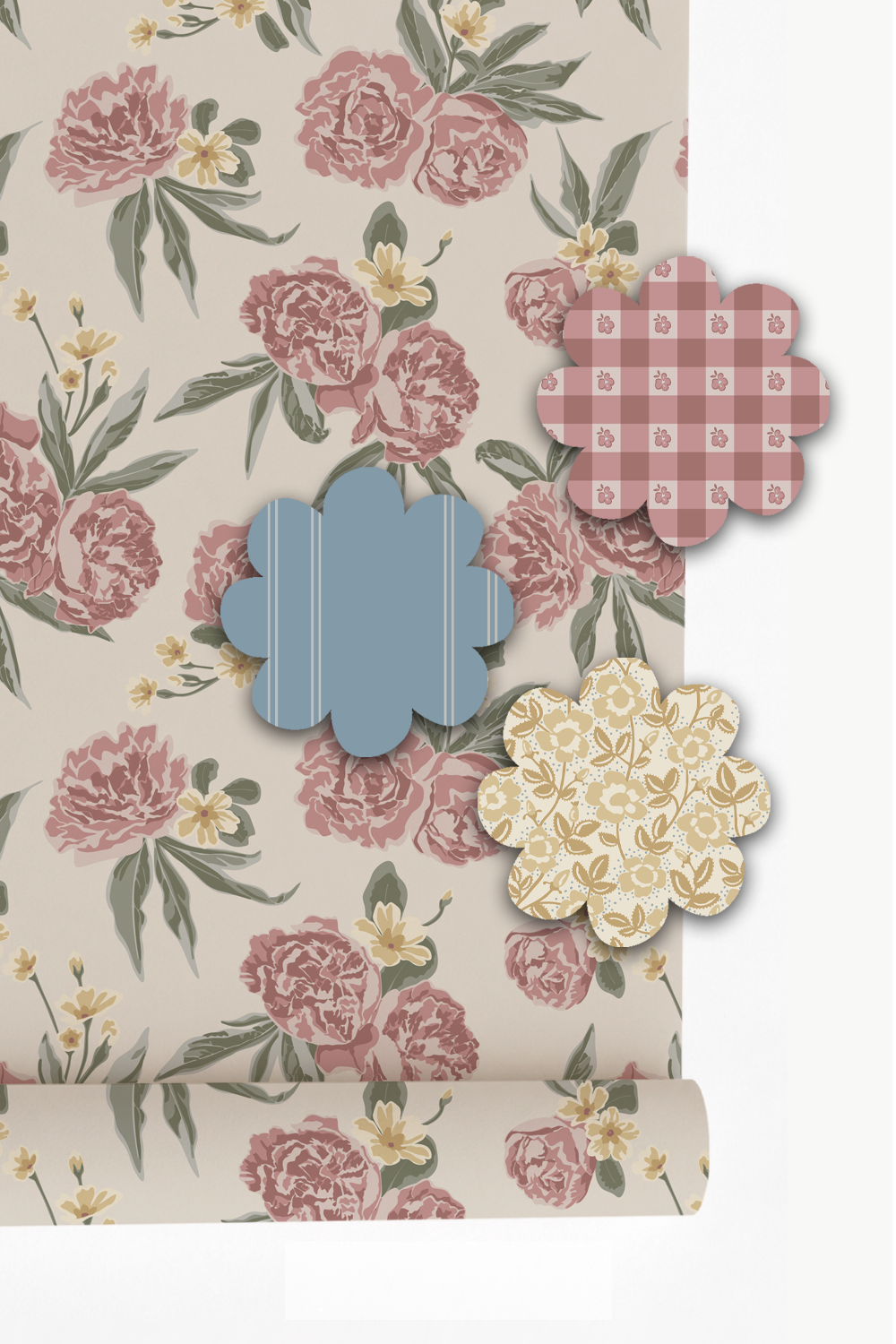
Smaller prints let the hero floral shine
Add Smaller Prints Rather Than Another Competing Pattern
Once you have chosen your main floral, resist the temptation to find another pattern with the same visual strength.
Instead, look for smaller prints that can sit comfortably beside it.
Tiny florals, simple geometrics, ginghams and narrow stripes can all work well because they add interest without competing with the larger floral.
The difference in size is important. When every pattern has similarly sized motifs, they can begin to fight for attention. Pairing a generous floral with something noticeably smaller gives the eye an easy way to move between them.
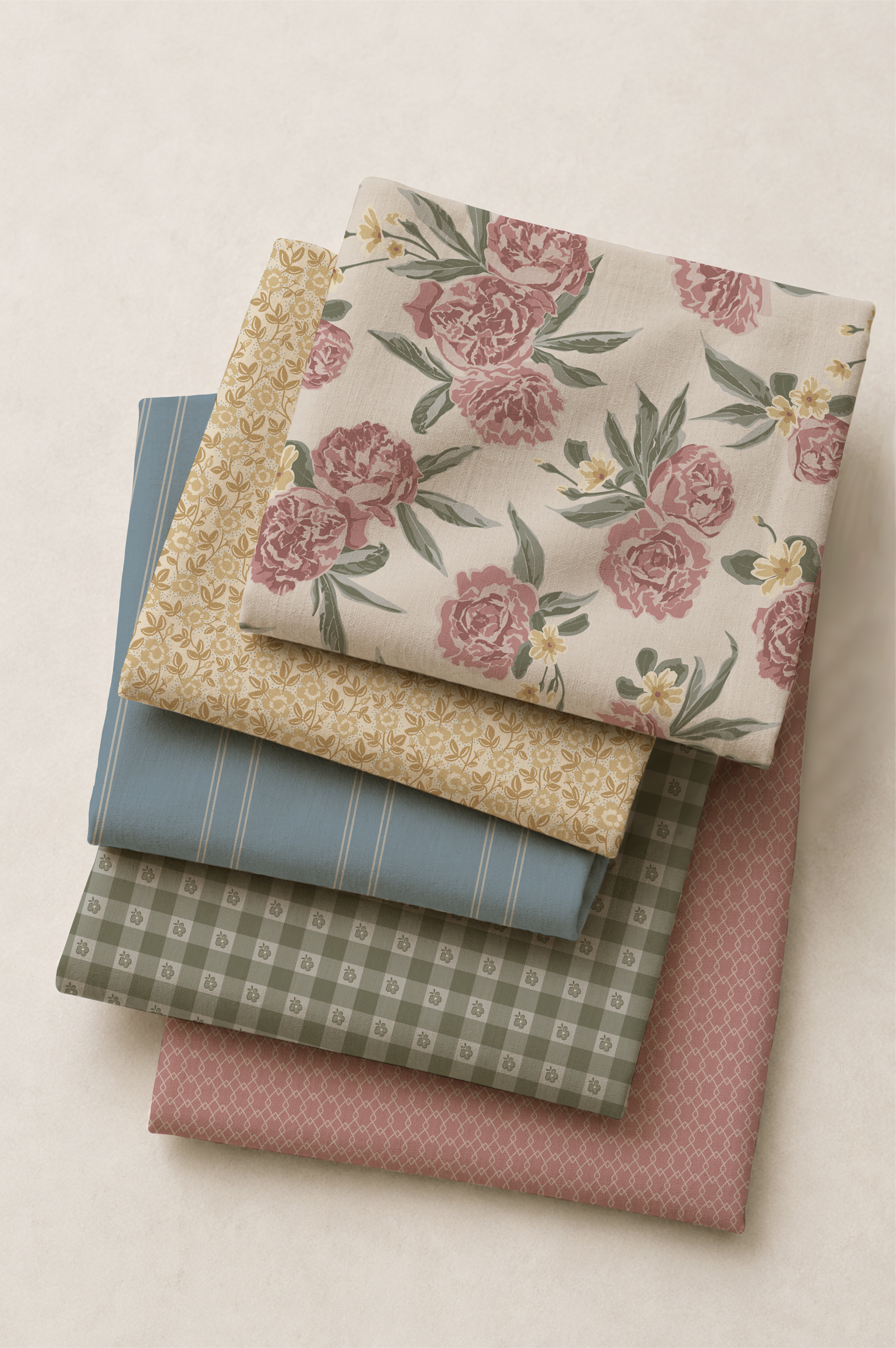
Patterns don't need to contain exactly the same colours to belong together
Let Colour Connect the Patterns
Look for a few colours that repeat throughout the room. A soft green from the leaves of a floral might appear again in a small print. A muted pink might be picked up in another fabric. A warm neutral can quietly run through several patterns.
Those small connections are often enough to make a combination feel intentional without making the room look overly coordinated.
This is also what allows a room to feel as though it has developed naturally over time rather than being purchased as a matching set.
Give Each Pattern a Different Job
Not every pattern needs to cover a large surface.
You might use the leading floral on wallpaper or bedding, then bring smaller prints onto cushions, a Roman blind or an upholstered seat. A stripe, gingham or quiet geometric can appear in smaller amounts elsewhere in the room.
Thinking about patterns this way makes the process much easier: one leads, a few support, and some appear only in small amounts.
It also means you don't have to use every coordinating pattern simply because it belongs to the same collection.
Choose the ones that help the room.
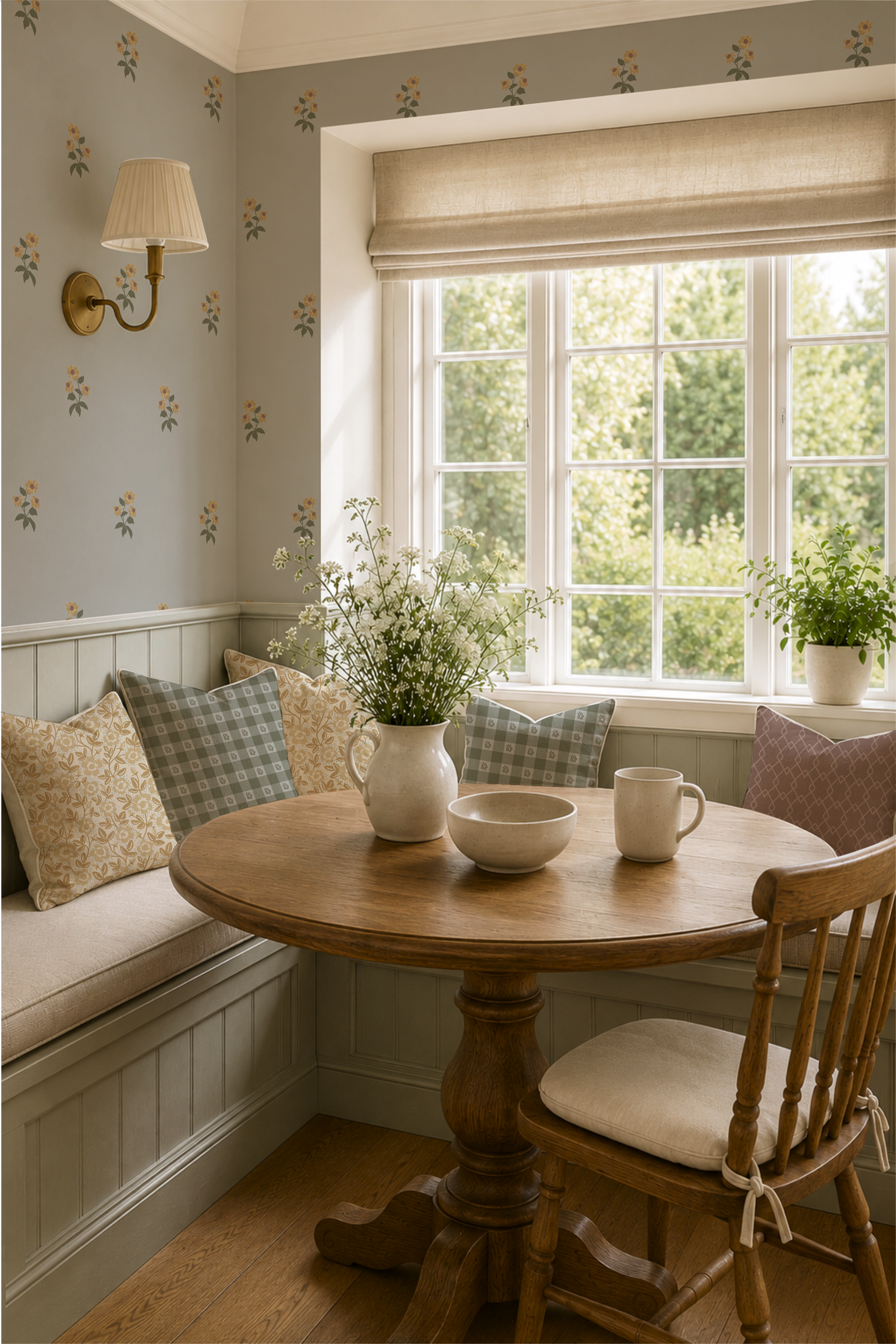
Every surface doesn't need to contain another pattern
Leave Some Quiet Space
One of the easiest ways to make several patterns work together is to give them something quiet to sit beside.
Painted walls, simple bedding, natural wood, an antique dresser, a plain lampshade or an unpatterned upholstered piece can all provide visual breathing room.
This doesn't mean the room needs to become neutral. It simply means that every surface doesn't need to contain another pattern.
In a character-rich room, those quieter elements are often what allow the florals to stand out.
See the Idea in Heirloom Bloom
I designed Heirloom Bloom around this kind of relationship between patterns.
Peony Pathways brings the larger romantic floral, while smaller florals, gingham, ticking and quieter geometric patterns offer different ways to layer pattern into a room without asking every design to be the centre of attention.
You don't need to use them all together. Instead, begin with the pattern you love most and choose one or two quieter companions from there.
The result can still be richly patterned, but it feels comfortable rather than busy—a room where the individual pieces belong together without looking overly matched.
If you'd like to see how the patterns work together, explore the Heirloom Bloom collection and choose the combination that feels right for your own room.